
If you’ve spent any time shopping for a folding knife, you’ve probably run into a wall of unfamiliar names — D2, S30V, 440C, VG-10, M390 — each promising to be sharper, tougher, or more rust-resistant than the last. The steel is arguably the single most important factor in how a knife performs, yet it’s also the most confusing part of the buying decision.
This guide breaks down what actually matters, so you can pick a steel based on how you’ll use the knife — not just brand hype.
Why Steel Choice Matters More Than You Think
The blade steel determines four things that affect your day-to-day experience with a knife:
- Edge retention — how long the blade stays sharp before you need to touch it up
- Toughness — resistance to chipping or snapping under stress
- Corrosion resistance — how well it holds up against moisture, salt air, or acidic foods
- Sharpenability — how easy it is to bring back to a fine edge at home
Here’s the catch: no steel excels at all four. Every steel is a trade-off, usually balancing edge retention and toughness against ease of sharpening and rust resistance. Understanding this trade-off is the real key to choosing well.
The Main Steel Categories
1. Stainless Steels (Best for Everyday Carry & Wet Environments)
Stainless steels are alloyed with chromium, which forms a passive layer that resists rust and staining. They’re the most popular choice for pocket knives because most people carry a knife daily, often in varying weather.
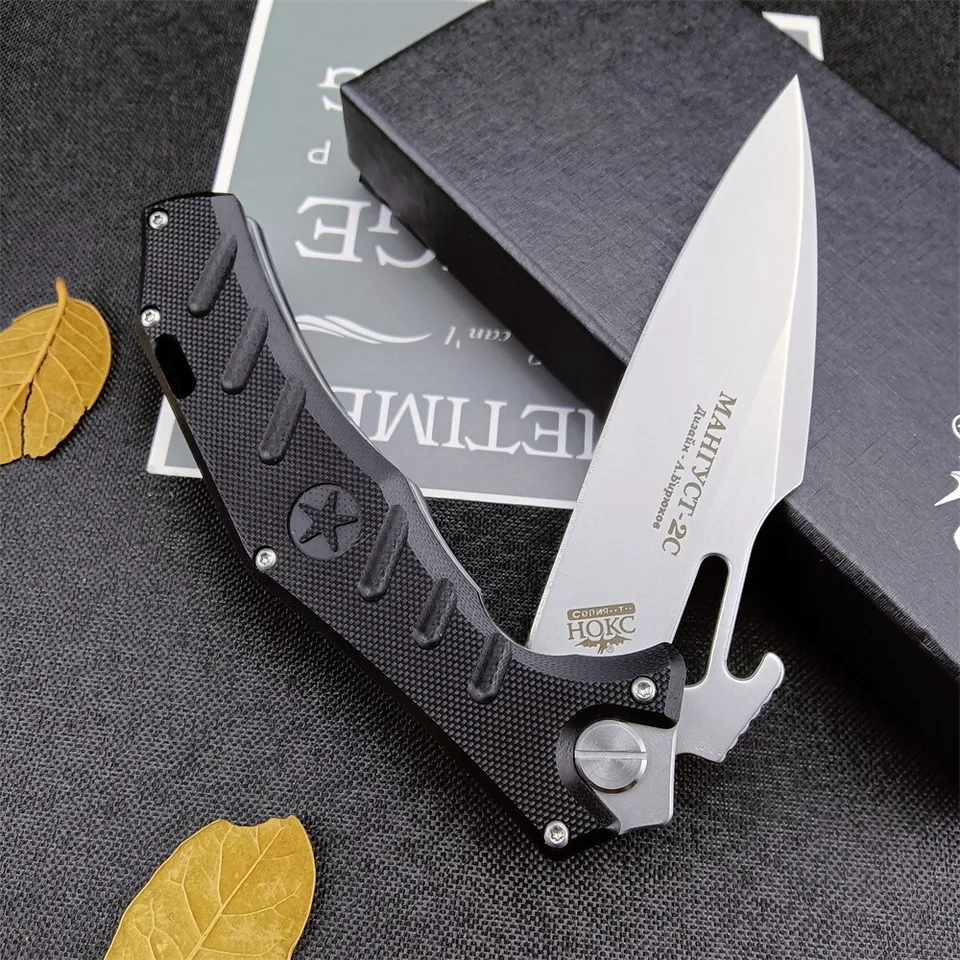
- 440C — A budget-friendly stainless steel with decent edge retention and very good corrosion resistance. A common choice on entry-level to mid-range knives, and a solid pick if you want low maintenance over ultimate performance. Tactical Russian Folding Blade Knife — 440C Steel, 3.8″ Blade
- VG-10 — A Japanese stainless steel known for a good balance of sharpness, edge retention, and toughness. Popular in both kitchen cutlery and folding knives.
- S30V / S35VN — American-made powder steels with excellent edge retention and good toughness for a stainless steel. A step up in price, aimed at people who want their knife to hold an edge through heavy daily use.
- M390 / 20CV / 204P — Premium powder steels offering some of the best edge retention available in a stainless steel, with strong corrosion resistance. Common on higher-end knives; the trade-off is that they can be harder to sharpen at home. Folding Blade Knife — M390 Steel, Tactical Flipper
2. Tool Steels (Best for Hard Use & Value Performance)
Tool steels typically contain less chromium than true stainless steels, meaning they offer excellent edge retention and toughness at a lower price point — but require more maintenance to prevent rust.
- D2 — Sometimes called a “semi-stainless” steel. Known for holding an edge very well and resisting wear, at a price well below premium powder steels. Requires more care to avoid corrosion than a true stainless. D2 Tanto Blade Folding Knife — G10 Handle
- 1095 / high-carbon steels — Very tough and easy to sharpen, popular on fixed-blade hunting and survival knives. Rusts easily if not oiled and dried after use.
3. Premium & Specialty Steels (Best for Collectors & Enthusiasts)
- CPM-S90V, Maxamet, Rex 121 — Extremely high edge retention, often at the cost of toughness and ease of sharpening. These are steels for people who want maximum performance and don’t mind investing in proper sharpening equipment (like diamond stones).
How to Choose Based on How You’ll Use the Knife
If you carry a knife daily for light tasks (opening mail, boxes, general EDC): Look for a stainless steel like 440C, VG-10, or S30V. You’ll get low maintenance and dependable performance without needing to think about it much.
If you use your knife hard outdoors — camping, hunting, batoning wood: Prioritize toughness. D2, 1095, or S35VN are strong picks — they hold up to impact and hard use better than more brittle premium steels.
If you’re near saltwater, humid climates, or don’t clean your knife often: Stick with true stainless steels with higher chromium content, like 440C or M390. Avoid high-carbon tool steels unless you’re diligent about maintenance.
If you’re a collector or enthusiast who enjoys sharpening as part of the hobby: Premium powder steels like M390 or S90V let you get the most performance, and the extra sharpening effort is part of the appeal for many hobbyists.
A Quick Note on Hardness (HRC)
You may see a knife listed with an HRC (Rockwell Hardness) rating, like 58-60HRC. In general:
- Higher HRC = better edge retention, but more brittle (can chip)
- Lower HRC = tougher and easier to sharpen, but dulls faster
Most quality folding knives fall between 58–62 HRC, which is a good working range for everyday use.
Final Thoughts
There’s no single “best” knife steel — only the best steel for your specific use case. Start by asking yourself: Do I care more about edge retention, ease of maintenance, or toughness? Once you know that, narrowing down a steel type becomes much easier.
Browse our full selection of folding blade knives featuring a range of steels to match every use case, from everyday carry to hard outdoor use.
Have questions about which steel is right for your next knife? Contact us — we’re happy to help you find the right fit.