

Choosing the best knife handle materials can make or break a custom knife. Even a well-ground blade feels unfinished if the scales are slippery, crack over time, or clash with the style of the knife. Whether you are building a full-tang fixed blade, fitting scales onto a folder, or restoring an older blade, matching your handle material to how the knife will actually be used is essential.
If you are sourcing scales for your next project, you can browse matched pairs in our Knife Handle Material collection and compare how the most popular materials perform at the workbench.
1. G10 Composite Scales: Tough, Stable & Weatherproof
G10 is made from continuous fiberglass cloth layered with epoxy resin under high pressure. It is one of the most dependable modern handle materials available for makers who want zero fuss and long-term stability.
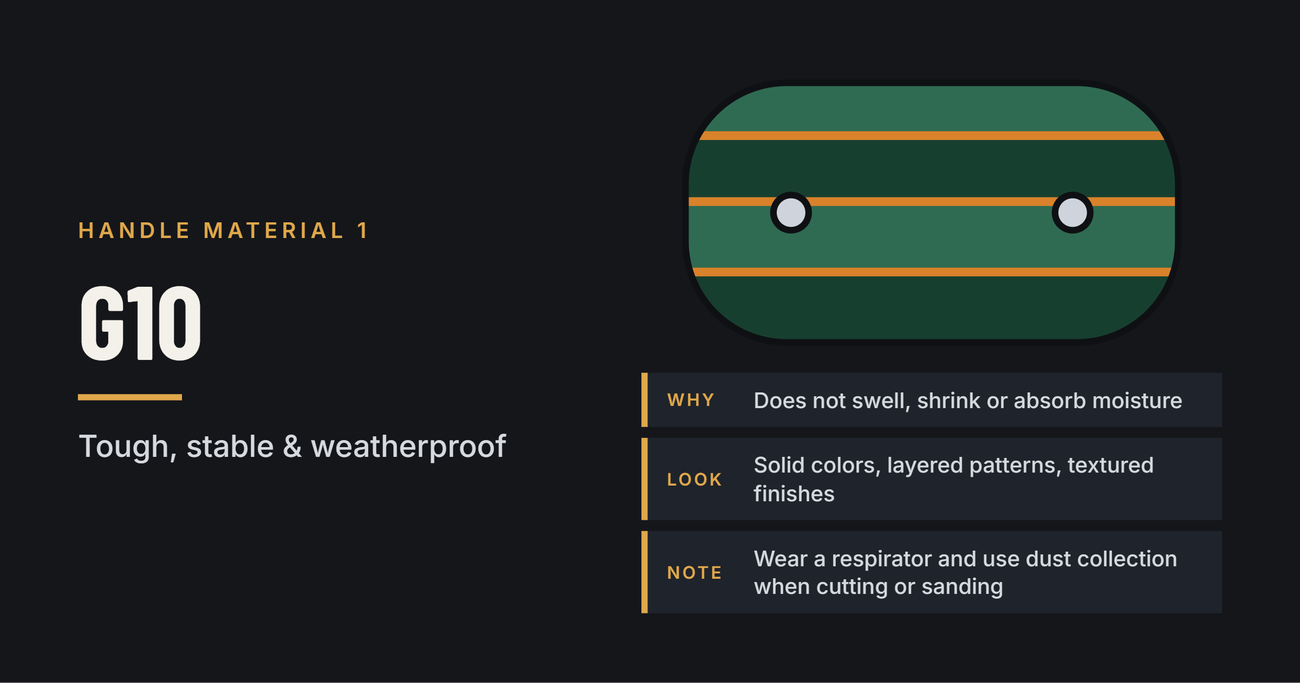
- Why makers choose it: G10 does not swell, shrink, or absorb moisture, making it ideal for outdoor knives, kitchen prep blades, and humid climates.
- Look & feel: Available in solid colors, layered patterns, and textured finishes—including eye-catching options like rainbow and patterned G10—that hold crisp edges and fine checkering or grooves without fraying.
- Workshop note: Always wear a properly fitted respirator and dust collection when cutting or sanding G10, as fine fiberglass dust is harsh on lungs and skin.
2. Micarta: Classic Grip That Improves With Use
Micarta is crafted by pressing layers of linen, canvas, or paper under heat and resin pressure. It has been a favorite among knifemakers for decades because of how comfortable it feels in hand.

- Why makers choose it: Canvas and linen Micarta offer warm, reliable traction—even when hands are wet or oily—while resisting cracking and impact damage.
- Look & feel: Micarta has a subtle, organic depth that darkens slightly with hand oils and handling over time, giving working knives character without looking flashy.
- Workshop note: Like G10, Micarta creates fine dust during grinding and shaping, so keep a dust mask handy and finish with progressively finer grits for a smooth, tactile feel.
3. Wood (Stabilized & Exotic Hardwoods): Warmth & Natural Character
Nothing matches the warmth and visual depth of real wood on a custom knife. Stabilized woods (hardwoods infused with resin under vacuum and cured) solve the biggest traditional drawback of wood by preventing warping, cracking, and moisture absorption.

- Why makers choose it: Stabilized and exotic hardwoods bring rich grain patterns, natural warmth, and classic appeal to hunting knives, bushcraft blades, and custom gifts.
- Look & feel: Every piece of wood grain is one of a kind, ranging from subtle figure to dramatic burl and contrasting streaks.
- Workshop note: Watch your belt speed when shaping wood so heat doesn’t scorch the grain, and finish with a suitable oil, wax, or buffing compound to bring out the depth.
4. Resin & CTek Honeycomb Scales: Bold, Modern & Custom
If you want a knife handle that stands out immediately, resin and CTek honeycomb scales deliver vibrant colors, depth, and modern visual impact that natural materials simply cannot replicate.

- Why makers choose it: Resin and honeycomb composite blanks allow bold color combinations, translucent depth, and geometric structure for custom builds and statement pieces.
- Look & feel: Smooth, striking, and distinctive—great for makers crafting eye-catching custom knives or upgrading plain handles.
- Workshop note: Resin can melt or discolor if overheated on a high-speed belt grinder, so use sharp belts, light pressure, and frequent cooling pauses while shaping.
Quick Comparison: Which Knife Handle Material Fits Your Build?

Don’t Forget Hardware & Blade Stock for Your Build
Great handle scales are only part of the assembly. When planning your next project, make sure your hardware and steel match your design:
- 👉 Mosaic Pins: Lock your handle scales in place with epoxy and 8mm brass or steel mosaic pins that sand and polish flush for a clean custom finish.
- 👉 Blade Billets: Starting a stock-removal blade from scratch? Explore flat-ground, heat-treated Damascus, VG10 sandwich, and high-speed steel billets.
- 👉 Blade Blanks: Want to skip profiling and heat-treating? Pair pre-shaped Damascus and stainless blade blanks with your chosen scales.
Final Tip Before You Start Shaping
Before applying epoxy, dry-fit your handle scales and pins to verify alignment, contour comfort, and balance. Once everything lines up cleanly, mask off your blade to protect the finish, glue up your scales, and take your time with the final sanding and polishing stages.
👉 Explore our full selection of scales in Knife Handle Material and start building your next custom knife.